Most solid materials presented for elemental analysis by inductively coupled plasma mass spectrometry (ICP-MS) techniques require an initial sample preparation step to bring them into solution. For many sample matrices, a dissolution step is necessary in order to avoid problems of sample inhomogeneity and is often stipulated by the analysis protocol itself (for example US EPA Methods). Depending on the sample matrix, this digestion process may require the use of hot plates, microwaves or fusion assays. These procedures are normally labor and cost intensive, often requiring the use of hazardous chemicals such as concentrated acids that may lead to loss of certain analytes during the procedure and increase the potential for contamination.
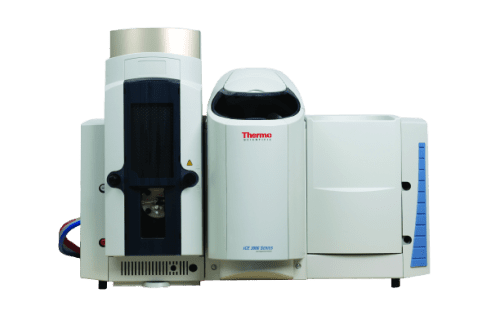
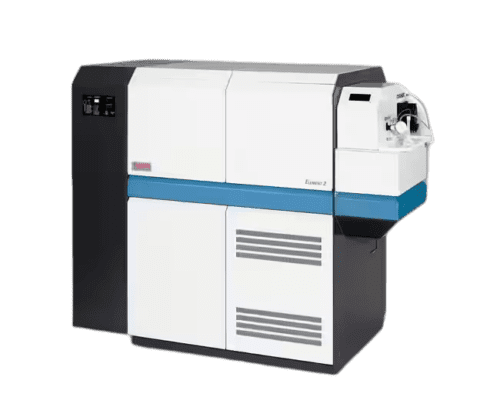
Laser ablation (LA) enables direct sampling in the solid without the need for hazardous chemicals and minimizes the potential for contamination by sample handling. It is capable of sampling almost all solid samples, including conducting samples (e.g. metals and semiconductors), non-conducting samples (e.g. mineral grains, paper and plastics) and biological materials (e.g. tissue sections). It is easily hyphenated with different ICP-MS systems depending on the type of information that is required. Quadrupole based ICP-MS systems, for example the Thermo Scientific™ iCAP™ RQ ICP-MS and iCAP TQ ICP-MS, allow accurate quantification, while sector field instruments, like the Thermo Scientific ELEMENT™ HR-ICP-MS, also provide improved precision for isotope ratio determination. Multicollector ICP-MS systems, for example the Thermo Scientific™ NEPTUNE Plus™ MC-ICP-MS, allow isotope ratio determination with ultimate precisions for geochronology applications.
Detection limits in the range of ng·g-1 by LA-ICP-MS can be achieved, which on the first glance may seem high when compared to liquid sample introduction ICP-MS, but in many cases Method Detection Limits (MDL) by LA-ICP-MS can be superior after taking into account the effects of sample preparation and dilution.
There are many laser ablation systems available from industry partners, each with differing wavelengths, energy output levels and pulse durations (summarized in Table 1). Laser ablation works on the principle of energy transfer, and generally all materials absorb better in the UV (ultraviolet) wavelength range (400 nm and below). Commercial systems are therefore typically offered with wavelengths at 266 nm, 213 nm and 193 nm. In terms of wavelength, 266 nm lasers generally penetrate deeper into sample matrices, are very effective for opaque materials and are generally used for bulk analysis. A 193 nm laser provides more fine control over depth penetration, is better suited for the analysis of more transparent materials and is often used for profiling, mapping and similar (high end) applications. 213 nm based lasers offer a good compromise in performance and is a good ‘general use’ laser system for most sample types. A good general approximation is that the more transparent (or paler) the sample matrix, the more likely a lower wavelength laser will be effective

For all laser ablation systems, the most important parameters influencing the ablation process, and hence the analytical result, are spot size, fluence and repetition rate.
The ideal combination of spot size, fluence and repetition rate are defined by the sample type and/or application.
There are well-characterized standard reference materials that can be used for tuning and performance verification of a LA-ICP-MS system. For example, NIST reference materials 610, 612 and 614 (trace elements in glass) contain a variety of trace elements and are ideally suited for performance testing. Qtegra ISDS Software includes a dedicated autotune routine for laser ablation that uses NIST 612 to optimize the sample introduction system and lens parameters for optimum sensitivity and oxide formation.
The QCell collision/reaction cell system used in both the Thermo Scientific iCAP Q and iCAP Qnova Series ICP-MS allows for interference free analyses across the entire mass range (Li to U) using kinetic energy discrimination (He KED). For specific (generally high mass range) applications, collisional focusing can be used to increase the attainable sensitivity for many elements.
What is Elemental Imaging or Mapping?
Elemental images or maps refer to an LA-ICP-MS analysis that provides information on the elemental distribution across a two-dimensional area of a sample, for example across the surface of a mineral grain or biological tissue section. As the laser is fired at the sample surface, the sample is moved at a defined and constant rate. This means that the time profile of a line scan can be translated into a distance profile. Gathering multiple profiles across the sample generates a 2D image of the elemental distribution in the sample (3D after moving the laser sampling point in the vertical axis), where signal intensity is directly proportional to concentration (see Figure 1, for example).

Imaging is of particular interest in biological samples, as here the distribution of an element (for example, in stems and leaves of a plant) may give valuable insight on uptake and distribution of essential or toxic trace elements. Detection sensitivity and interference elimination is crucial for this application, as it translates into an expansion of the achievable dynamic range across the image. Therefore, the use of triple quadrupole ICP-MS offers decisive benefits for this application.
There are no reviews yet.